Restaurant plates are becoming more expressive. Instead of relying only on perfectly uniform shapes and plain finishes, more dining concepts are exploring artisan ceramic plates, organic forms, earthy colors and textured surfaces to create a more distinctive table setting.
The change is not simply about making dinnerware look more decorative. It reflects a wider interest in food presentation, sensory dining and restaurant spaces that feel more individual.
Why Organic Shapes Are Getting Attention
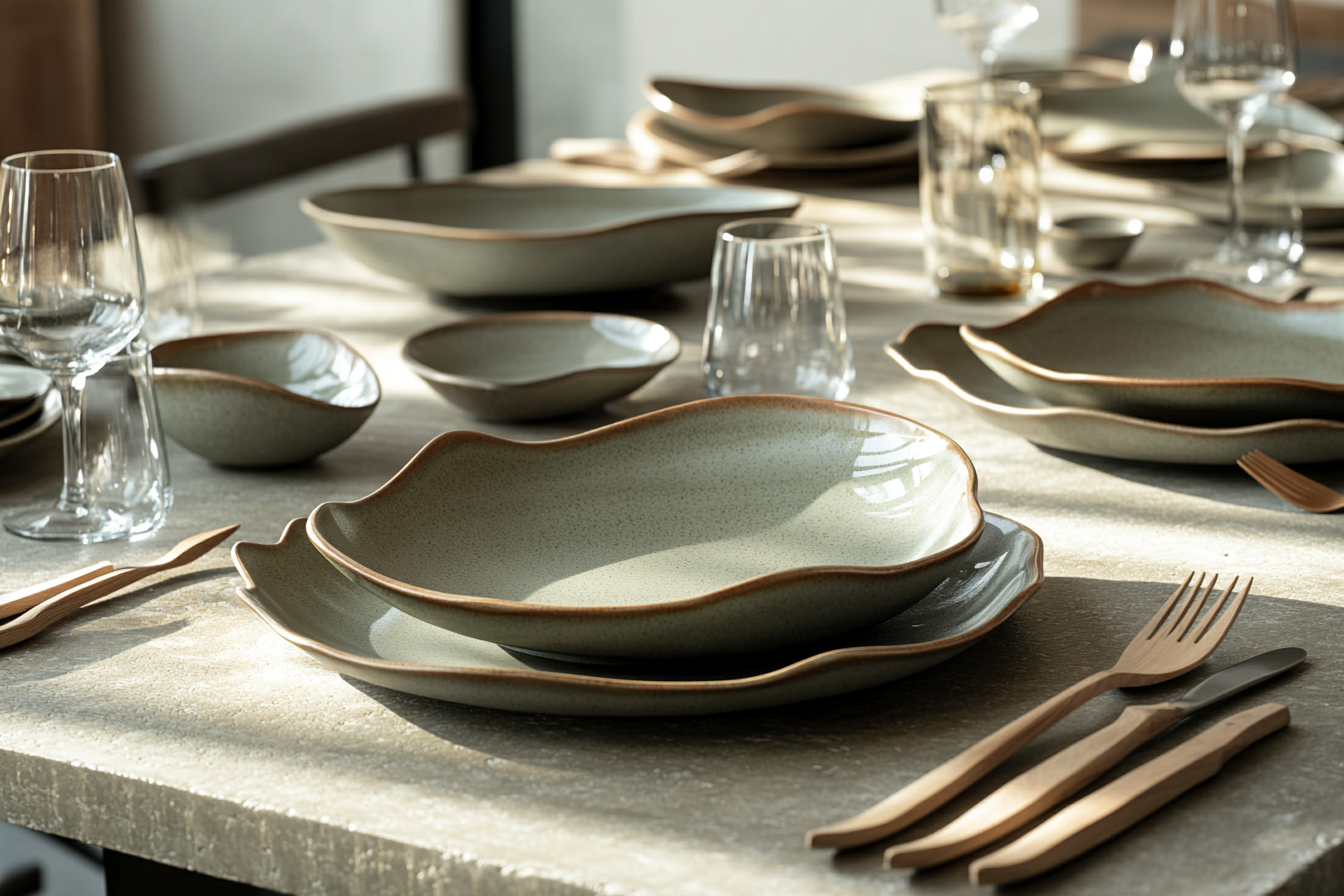
Perfectly round and square plates will always have their place in commercial dining, but organic shapes can give a table a more relaxed and handcrafted character.
Slightly irregular edges, natural silhouettes and subtle surface variations can make a plated dish feel less formal and more connected to the ingredients themselves. This works particularly well for modern restaurants, contemporary Asian concepts, bistros and chef-driven dining spaces.
The key is balance. The plate should have enough character to support the restaurant concept without distracting from the food.
Texture Can Change the Way Food Looks
Color is only one part of ceramic dinnerware. Texture and glaze can also influence how a dish is perceived.
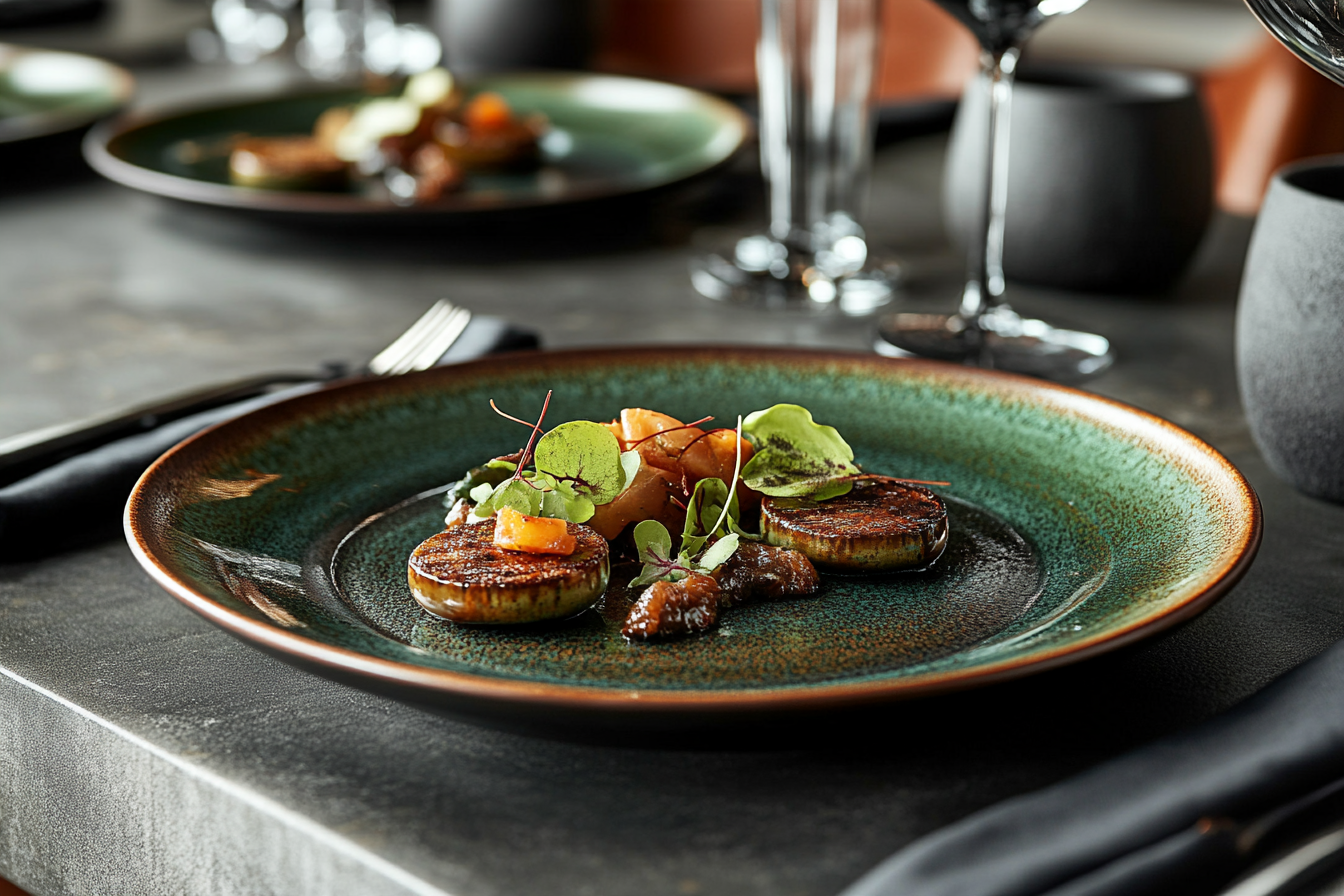
Deep tones, reactive glaze effects and subtle surface variations can create contrast around ingredients, while earthy greens, browns and warm neutrals provide a natural background for vegetables, herbs, grains and other fresh ingredients.
This is one reason textured ceramic plates are increasingly being considered as part of food presentation, rather than simply as serving equipment.
From Tableware to Dining Experience
The growing interest in experiential dining has also changed expectations around the table. Guests are increasingly paying attention to the complete dining environment, from the interior and lighting to the presentation of individual dishes.
Tableware is especially visible because it sits directly in front of the guest. It can also become part of the image when diners photograph and share their meals online.
A distinctive ceramic plate does not guarantee a memorable dining experience, but when its color, shape and texture work with the food and interior, it can make the entire table feel more intentional.
Choosing Artisan Ceramic Plates for a Restaurant
For commercial restaurants, visual appeal is only the starting point.
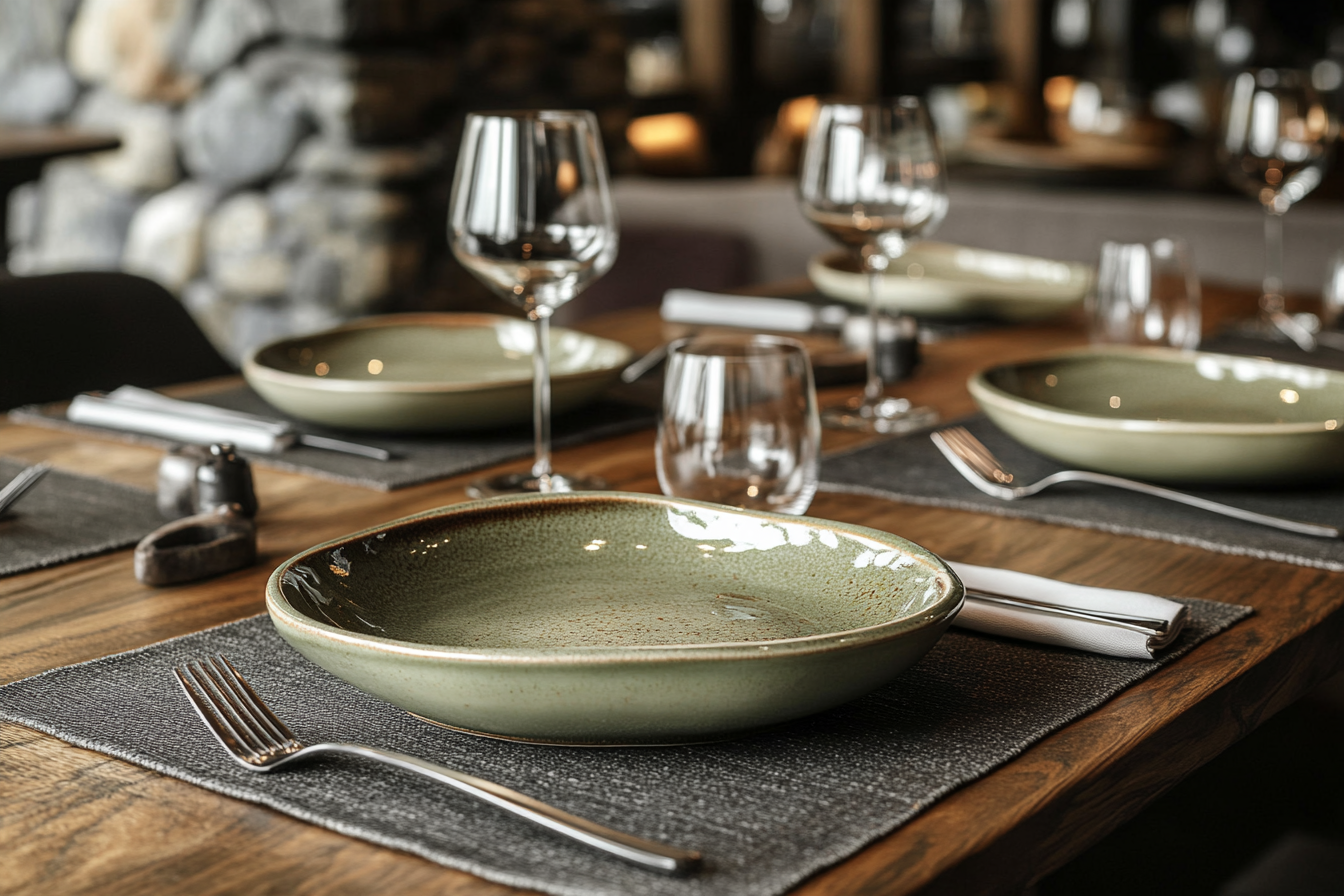
The right artisan restaurant dinnerware should also suit the menu, service style and daily operation. Restaurants need to consider plate proportions, matching bowls and serving pieces, storage, cleaning and durability alongside appearance.
A successful collection should therefore combine visual character with practical usability.
The goal is not to replace classic dinnerware completely. Instead, organic shapes, textured finishes and distinctive ceramic colors give restaurants another way to build a table setting that feels connected to their concept.
As food presentation and dining atmosphere become increasingly important, the restaurant plate is becoming more than a surface for serving food. It is part of the composition, part of the table and, ultimately, part of the dining experience.


