Restaurant tableware is no longer simply a functional part of food service. As restaurants focus more on food presentation, interior design and guest experience, plates, bowls and serving pieces are becoming part of the dining environment.
A well-designed plate can frame a dish, complement the interior and strengthen a restaurant's visual identity.
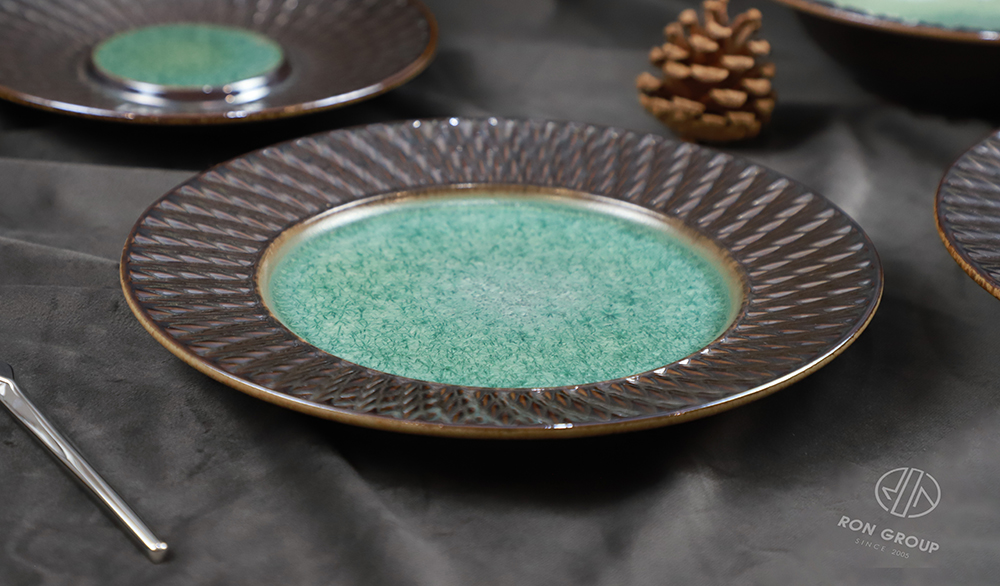
From Plain White Plates to More Expressive Tableware
Classic white dinnerware remains a practical choice, but many restaurants are exploring earthy colors, organic shapes, textured surfaces and distinctive ceramic finishes.
This reflects a broader shift in restaurant design. Furniture and lighting are no longer the only elements shaping the atmosphere. Tableware, glassware and cutlery can also contribute to a cohesive dining concept.
Dark ceramics can create contrast in contemporary restaurants, while green, earthy and natural tones can complement Asian-inspired, garden or organic dining concepts.
When the Plate Becomes Part of Food Presentation
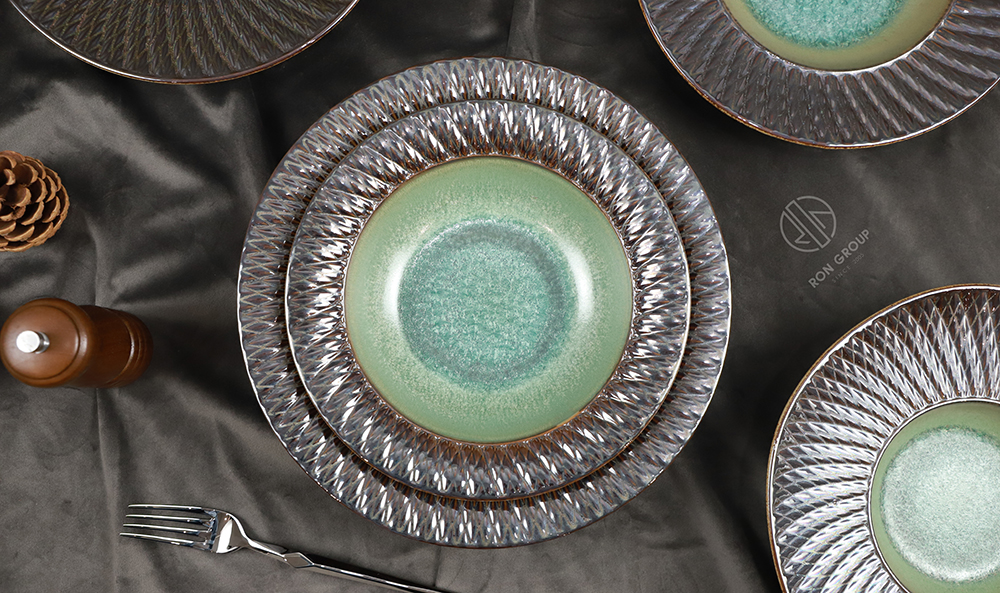
The plate provides the visual frame for a dish, making color, texture and proportion important parts of food presentation.
The Jade Inlay · Cloud Valley collection combines a deep ceramic base with jade-inspired green detailing and a textured finish. The contrast creates a distinctive background for contemporary dishes while maintaining a refined restaurant aesthetic.
Rather than competing with the food, the design adds another visual layer to the dining experience.
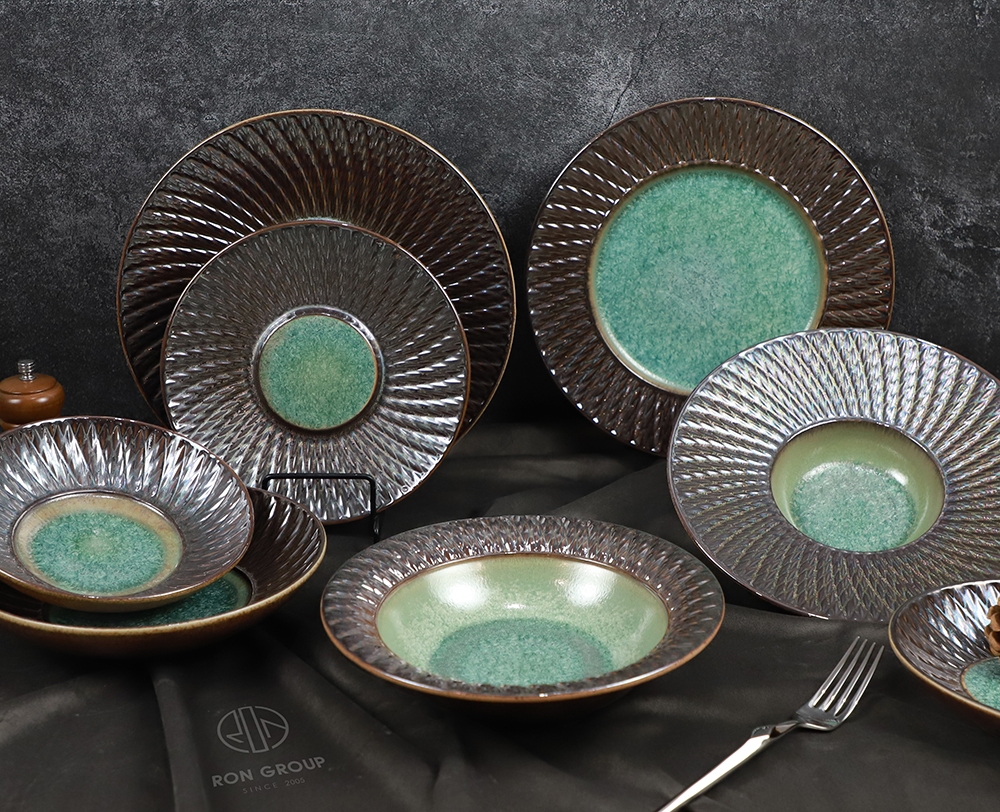
Tableware and Experiential Dining
The growing focus on experiential dining has made the table setting more important. Guests experience a restaurant as a combination of food, atmosphere, service and design.
Because tableware sits directly in front of the guest, it can become an important part of that experience. It can also contribute to the visual identity of dishes photographed for social media.
The most effective approach is not necessarily the most decorative one. Instead, tableware should work naturally with the restaurant's furniture, lighting, food and interior materials.
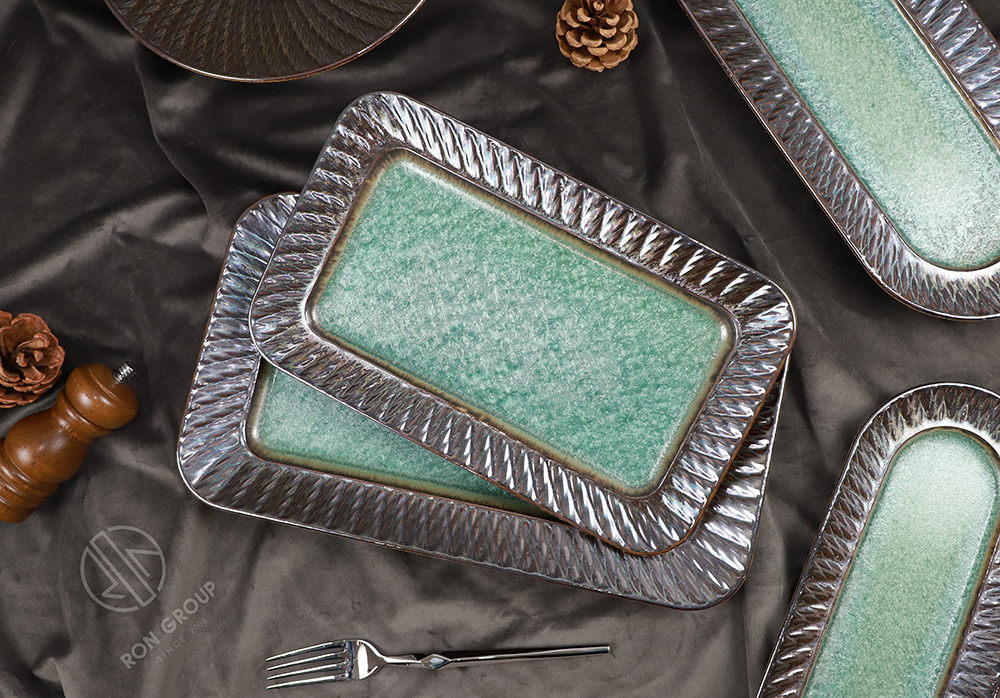
The Table Is Part of the Brand
Restaurant branding extends beyond logos and signage. The plate, glass, cutlery and furniture are all physical touchpoints between a restaurant and its guests.
For this reason, commercial tableware should balance visual character with everyday practicality. A coordinated collection can provide different plates, bowls and serving pieces while maintaining a consistent design language.
Ultimately, the right restaurant tableware does more than serve food. It connects food presentation, interior design and brand identity, helping create a dining experience that feels complete from the table outward.


