Why Chipping Is One of the Biggest Hidden Costs in Restaurants
In busy restaurants, ceramic plate chipping is not an accident — it is usually a selection problem. Many operators focus on appearance and price, but overlook how plates behave under daily service pressure, dishwashers, and stacking.
For high-traffic restaurants, chipped plates quickly become a replacement nightmare, affecting both food presentation and operating cost.
The Real Reasons Restaurant Ceramic Plates Chip Easily
Most chipping issues come from three structural factors:
Low firing temperature, resulting in weak ceramic density
Thin rims designed for home use, not commercial handling
Inconsistent glaze bonding, especially on decorative edges
Home-grade plates simply cannot handle commercial kitchen conditions, even if they look premium at first glance.
What Makes Commercial-Grade Ceramic Tableware Different
Commercial-grade ceramic tableware is engineered for durability first, aesthetics second.
Key differences include:
High-fired ceramic bodies with stronger molecular structure
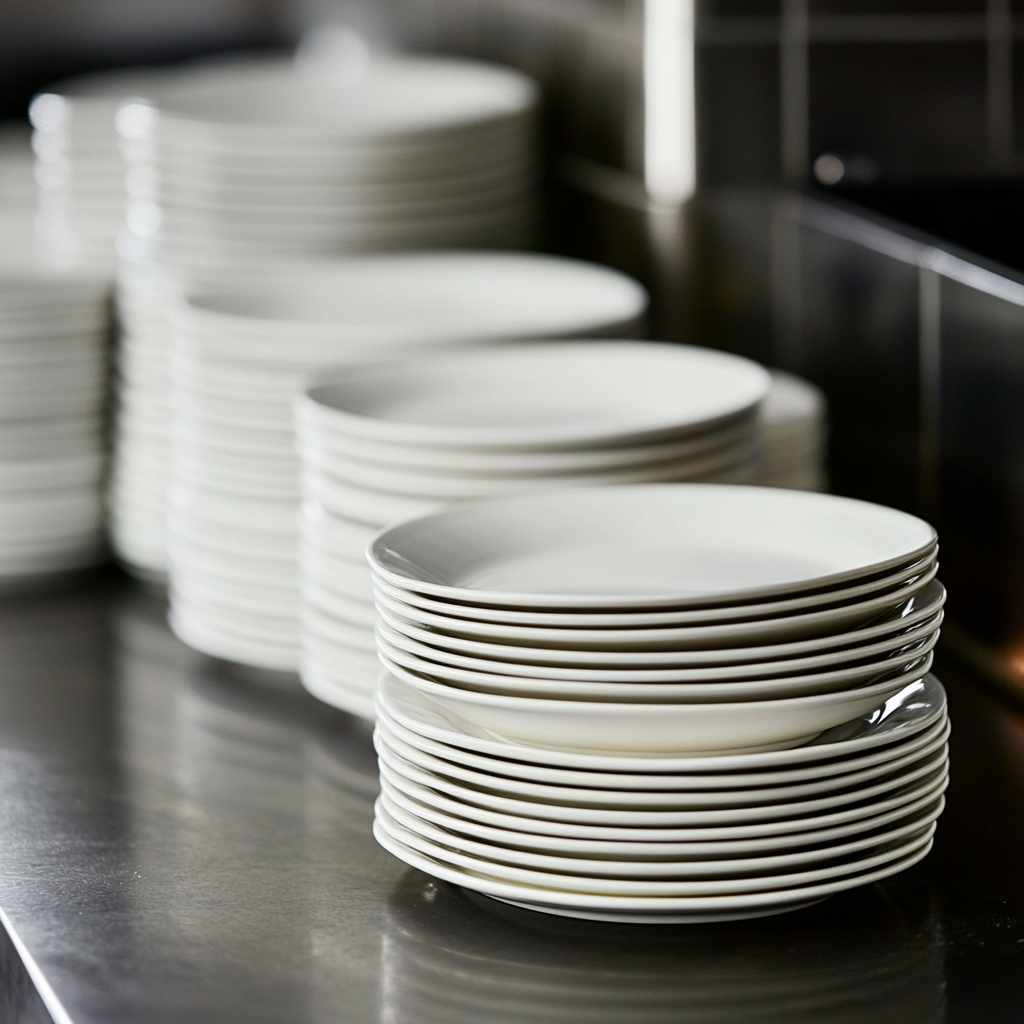
Reinforced rims to resist impact during stacking and clearing
Chip-resistant glaze formulas tested for restaurant environments
These details directly reduce breakage rates and extend the usable lifespan of plates in real service.
Why High-Traffic Restaurants Must Prioritize Durability
In restaurants with constant table turnover, replacement cost matters more than initial unit price.
Choosing durable ceramic plates means:
This is why professional buyers now treat chip resistance as a core purchasing standard, not a bonus feature.
How to Choose Chip-Resistant Ceramic Plates for Restaurants
Before placing an order, commercial buyers should confirm:
Firing temperature and ceramic density
Edge thickness and rim design
Dishwasher safety under commercial cycles
Availability of long-term replacements
Well-selected restaurant ceramic plates survive daily service — not just photo shoots.
Final Takeaway
If ceramic plates chip too fast, the issue is rarely the kitchen team.
It is almost always the wrong tableware specification for commercial use.
Choosing commercial-grade ceramic dinnerware is not an upgrade — it is a necessity for sustainable restaurant operations.


