A detailed explanation of durability factors in commercial ceramic tableware, emphasizing firing temperature, structural design, and glaze performance.
Durability is one of the most defining qualities of restaurant-grade ceramic tableware, and it directly affects long-term operational costs for any hospitality business. Professional dinnerware must endure repeated dishwashing cycles, thermal shocks, and continuous contact with utensils without losing structural strength or visual integrity. This level of reliability is achieved through a combination of material formulation, firing technology, body density, and glaze performance.
The base of a durable plate is built from refined clay blends engineered for high-temperature firing. Vitrified porcelain dinnerware, fired above 1200°C, achieves exceptionally low water absorption rates, preventing internal cracking and moisture expansion. This dense structure helps the plate withstand heat transitions between ovens, warmers, and cold plating environments—an essential requirement for modern commercial kitchens.
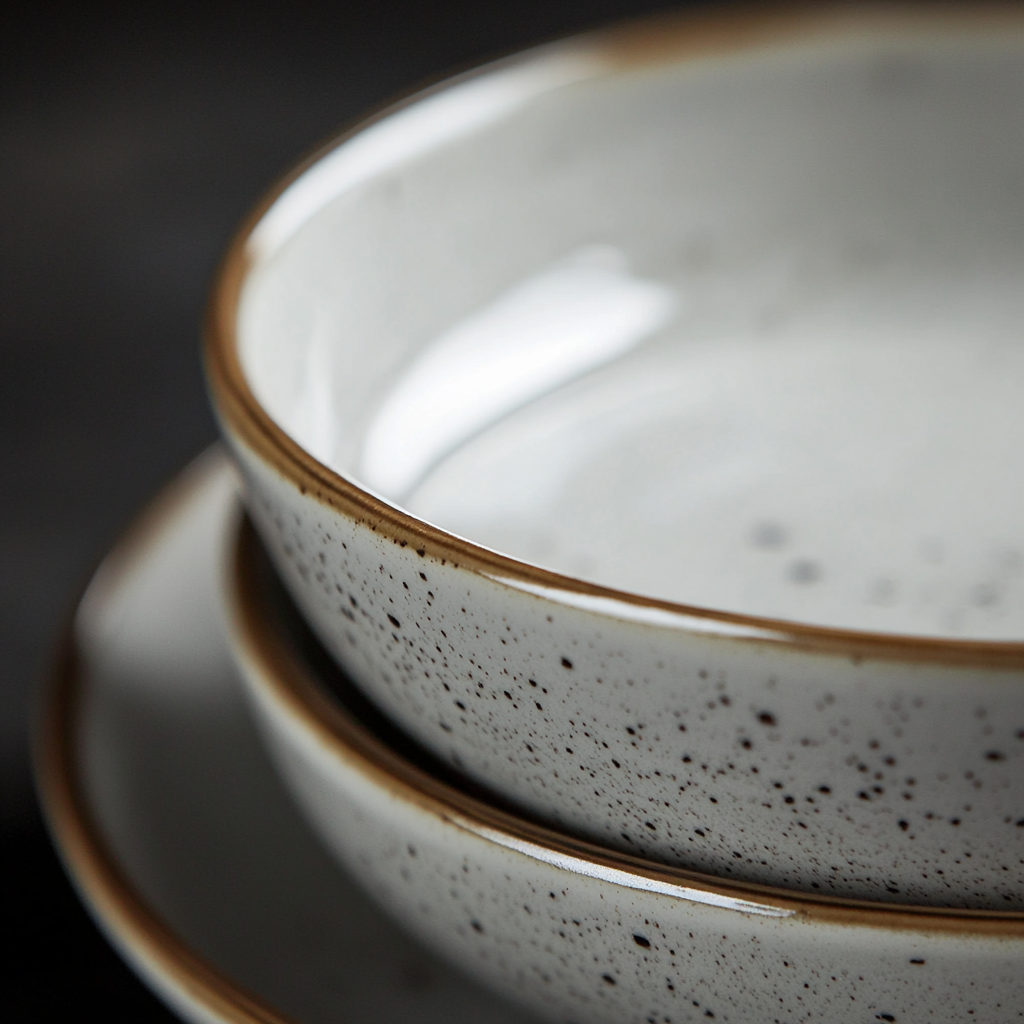
Rim strength is equally critical. Plates designed for hospitality use often feature reinforced or rounded rims that disperse impact force when handled quickly by servers or stacked in tight storage. This structural design significantly reduces chipping, which is one of the most common causes of replacement.
The glaze is the tableware’s protective shield. High-performance glazes protect the ceramic body from staining, utensil abrasion, and metal marking. Many premium commercial collections incorporate scratch-resistant glazes and improved surface sealing to keep the plates looking new even after years of service.
Restaurants investing in these durability-focused features benefit from lower breakage rates, more stable inventories, and a consistently polished presentation. Ultimately, durable tableware is not just a cost-saving asset—it is a foundation for operational efficiency and brand reliability.


